

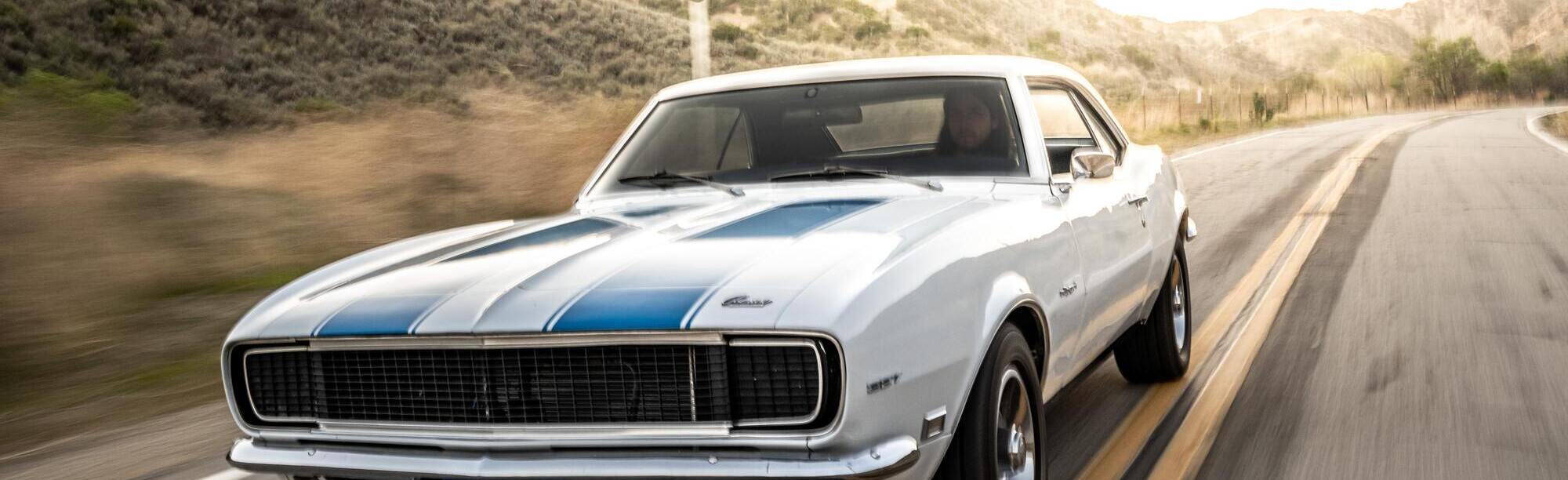
Since its 1966 debut as Chevrolet’s answer to the Mustang, the Camaro has stayed a favorite restoration and mod platform, backed by one of the strongest reproduction parts markets of any classic American car. Whether you’re chasing more performance, better daily drivability, or just a smoother ride, here are six upgrades worth prioritizing on a classic Camaro build, and how to think about sequencing them.
1. Exhaust Headers
Upgrading to performance headers matched to your engine size unlocks a real power gain over the restrictive factory exhaust manifolds, and it’s one of the more noticeable upgrades in terms of both sound and throttle response. Factory manifolds on many classic Camaros were designed around cost and packaging constraints rather than flow, so headers often represent one of the largest percentage power gains available for the investment.
2. Brake System Components
A classic Camaro’s original brake system often isn’t up to the demands of spirited driving or added engine power, especially since many base models left the factory with drum brakes or undersized front discs by modern standards. Common upgrade points include:
- Brake hoses: Replacing aged rubber brake hoses with quality rubber or stainless steel braided hoses can improve pedal consistency and restore braking performance, particularly on cars with decades-old hydraulic components.
- Calipers: Larger or higher-performance calipers can improve braking performance and heat management when properly matched with compatible rotors and pads.
- Rotors and pads: matched upgrades improve stopping power and reduce fade under repeated hard braking, and slotted or drilled rotor options can further improve heat management on cars that see spirited driving.
- Master cylinder and brake lines: often overlooked, but upgrading to a dual-circuit master cylinder or stainless steel lines improves both safety and pedal feel on cars that still run original hydraulic components.
3. Suspension Components
Decades-old suspension bushings and components lose precision over time, and rubber bushings in particular degrade regardless of mileage simply from age. Upgrading bushings, control arms, or a full suspension kit restores tighter handling and a more modern ride feel without sacrificing the classic look. Polyurethane bushings in particular offer a noticeable improvement in cornering precision over factory rubber, at the cost of slightly more noise and vibration transmitted through the chassis.
4. Interior Refresh
Faded fabric, cracked dash pads, and worn seat covers are common on classic Camaros, since original interior materials weren’t engineered to survive 50-plus years of sun exposure and use. An interior refresh, from reupholstering seats to replacing worn trim and dash pads, both improves daily comfort and protects resale value, and it’s one of the more DIY-accessible categories on this list for owners building skills before tackling mechanical work.
5. Wheels and Tires
Modern wheel and tire combinations improve handling and grip well beyond what factory-era rubber could offer, since tire compound technology alone has advanced enormously since these cars were built. They’re also one of the most visible upgrades for updating a classic Camaro’s stance, though it’s worth confirming fender clearance and backspacing requirements before committing to a specific size, especially on earlier generations with tighter wheel wells.
6. Cooling System Upgrades
Aftermarket radiators and electric fans handle heat far better than factory-era cooling systems, which matters even more once you’ve added power through exhaust, intake, or engine work. A classic Camaro’s factory cooling system was sized for factory power output; adding meaningful horsepower without upgrading cooling capacity is one of the more common ways owners end up with an overheating problem mid-build.
Where to Start
Evaluate your Camaro’s condition first: worn interior, tired suspension, or a restrictive exhaust each point toward a different starting priority. Pairing complementary upgrades (exhaust with intake, or brakes with tire upgrades) tends to deliver a more balanced result than tackling categories in isolation. If you’re building toward a specific goal, like more comfortable daily driving versus weekend track use, let that goal guide which categories get budget priority first rather than tackling them in an arbitrary order.
A Reasonable Build Sequence
For most owners, brakes and suspension come first since they’re safety and handling foundations that every other upgrade depends on. Exhaust and cooling upgrades pair naturally with any power-adding work. Interior and wheels/tires can be tackled whenever budget allows, since they don’t have the same safety-dependency relationship with the rest of the build.
Frequently Asked Questions
Q: What’s the most cost-effective first upgrade for a classic Camaro?
A: If your Camaro still has aging factory components, brakes or suspension are often the best first investment because they improve safety, handling, and overall drivability. If those systems are already in good condition, performance headers are one of the most cost-effective power upgrades available.
Q: Do I need to upgrade brakes if I add more engine power?
A: Strongly recommended. More power without matching brake capability creates a car that’s harder to control safely, especially under repeated hard stops or in an emergency braking situation.
Q: Will modern wheels and tires affect my classic Camaro’s ride quality?
A: It depends on the specific wheel/tire combination, but many owners find handling improves without a major ride quality tradeoff when sizing is chosen thoughtfully rather than maximized for looks alone.
Q: How much should I budget for a full six-category upgrade?
A: It varies enormously based on parts quality and whether you DIY or hire out labor, but spreading these six categories across a season or two lets you budget for quality parts in each rather than compromising to fit everything into one purchase.
—







January 5th, 2024 at 9:54 am (#)
Just ran into this article!