

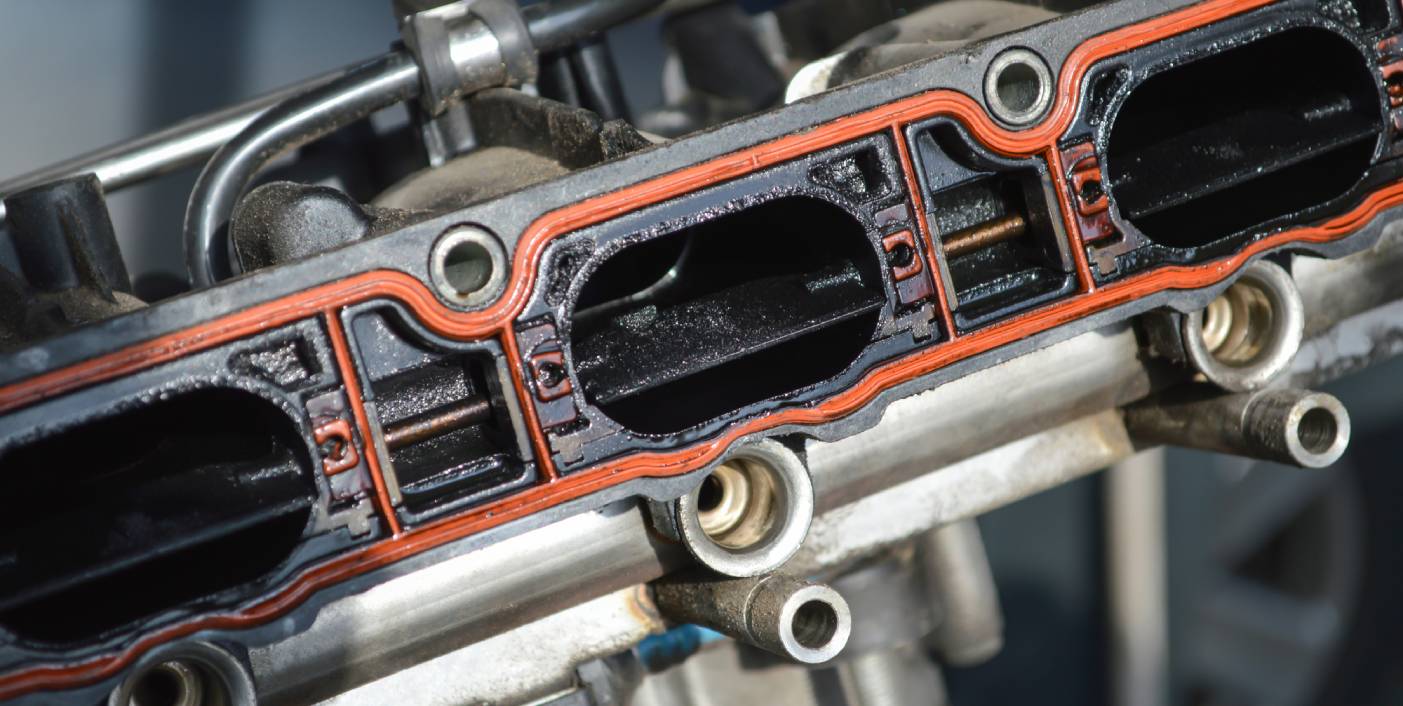
A leaking intake manifold throws off your Camaro’s air-to-fuel balance. Left unaddressed, that can lead to expensive downstream damage, including damage to the catalytic converter from a persistently lean condition. The good news is that intake manifold leak symptoms tend to show up early and are recognizable once you know what to look for. Here are the nine most common signs, why each one happens, and what to do once you’ve spotted one.
Why Intake Manifold Leaks Happen
Most leaks trace back to a failed gasket, often from age, heat cycling, or a manifold that’s been removed and reinstalled without a fresh gasket. Plastic composite manifolds, common on many modern Camaro engines, can also warp slightly over years of heat exposure, which changes the gasket’s sealing surface even if the gasket itself is intact.
1. Rough or Irregular Idle
A leak lets unmetered air into the intake system, throwing off the air-fuel ratio the engine computer expects. This often shows up first as a rough, uneven idle or occasional stalling at a stop, and it tends to be more noticeable when the engine is cold and idle speed compensation hasn’t fully kicked in.
2. Noticeable Loss of Power
The intake manifold distributes air and fuel to the cylinders. A leak disrupts that distribution, so your Camaro may feel sluggish under acceleration or struggle to maintain power on inclines, particularly under load when the engine is trying to pull more air than the leak allows it to meter correctly.
3. Reduced Fuel Efficiency
When the engine compensates for a leak, it often burns more fuel to maintain performance. A sudden drop in mpg, especially paired with other symptoms on this list, is a common tell, and it’s often the first thing an owner notices simply from watching the trip computer.
4. Hissing or Whistling Sound
A vacuum leak at the intake manifold frequently produces an audible hissing or whistling sound near the engine bay, most noticeable at idle or light throttle when engine noise is otherwise low. The pitch and location of the sound can sometimes help pinpoint which side of the manifold is affected.
5. Check Engine Light with Lean Codes
Because the leak adds unmetered air, the engine control module often logs lean-condition codes (like P0171 or P0174) or misfire codes tied to the affected cylinders. These codes are a strong early clue even before other symptoms become obvious to the driver.
6. Coolant Leaks Near the Manifold
Many intake manifolds route coolant passages through the gasket. A failing gasket can leak coolant, which you might spot as puddling on top of the engine, a sweet smell in the engine bay, or a slowly dropping coolant level with no visible external leak.
7. Engine Overheating
If a coolant leak from the manifold gasket goes unnoticed, coolant loss can eventually lead to overheating, so this symptom is worth taking seriously rather than topping off the coolant and ignoring the underlying cause. Repeated overheating can also warp the manifold further, compounding the original leak.
8. Misfires or Hard Starting
Unmetered air throws off combustion in specific cylinders closest to the leak, which can cause misfires, hard starts, or a rough cold start that smooths out once the engine warms up and the leak’s relative effect on the air-fuel ratio shrinks.
9. Fuel Smell in or Around the Vehicle
A leaking intake manifold can affect how efficiently fuel is burned, sometimes resulting in a noticeable fuel odor, particularly at idle when the engine is running rich to compensate for the unmetered air elsewhere in the system.
How to Confirm an Intake Manifold Leak
A smoke test is the recommended way to confirm an intake manifold leak: a machine pumps visible smoke into the intake tract under low pressure, and any leak point becomes visually obvious as smoke escapes from it. Some shops also use a carburetor or brake cleaner spray test, listening for a change in idle speed near the leak, but this method carries a real fire risk since the spray is flammable and can ignite near hot engine components, so a smoke test is the safer and more precise choice.
What Happens If You Ignore It
Beyond the performance and fuel economy losses, a prolonged intake leak can damage the oxygen sensors and catalytic converter from sustained lean-running conditions, turning a moderate gasket repair into a considerably more expensive exhaust system repair. Coolant leaking into the intake tract, in more severe cases, can also find its way into a cylinder and cause hydrolock, though this is uncommon with typical gasket leaks caught at the symptom stage.
How Intake Manifold Leaks Differ by Engine Type
On LS-based Camaro V8 engines, the intake manifold gasket is a large, low-pressure seal that’s relatively accessible, making gasket replacement a moderate but manageable repair. On turbocharged four-cylinder Camaro engines, boost pressure puts additional stress on the intake tract, so a leak downstream of the turbo can behave differently than a naturally aspirated vacuum leak, sometimes showing up as a boost leak code rather than a classic lean condition. Knowing which engine you have helps set expectations for both the symptoms you’ll see and the complexity of the eventual repair.
Preventing Future Leaks
Using a torque wrench and following the manufacturer’s tightening sequence when reinstalling an intake manifold helps the new gasket seat evenly, since uneven torque is a common cause of a leak reappearing shortly after a repair. Many techs also recommend replacing intake manifold bolts with new ones if the originals show any stretching or corrosion, since reused hardware doesn’t always clamp with the same consistency as new fasteners. Keeping the cooling system in good condition also matters, since the heat cycling that stresses the gasket is partly influenced by how well the engine manages temperature swings overall.
Frequently Asked Questions
Q: Can I drive with a leaking intake manifold?
A: Short distances are usually fine, but a leak that’s causing lean codes or overheating should be repaired promptly. Ignoring it risks further engine or emissions system damage, including to the catalytic converter.
Q: How much does it cost to fix an intake manifold leak?
A: A gasket replacement is typically a moderate repair, often involving several hours of labor since other components (intake plenum, throttle body, sensors) may need to come off to access the manifold. Costs vary by engine and vehicle, with V6 and V8 engines generally requiring more labor than a simpler four-cylinder layout.
Q: Is an intake manifold leak the same as a vacuum leak?
A: They’re related but not identical. An intake manifold gasket leak is one common cause of a vacuum leak, but vacuum leaks can also come from hoses, gaskets elsewhere in the intake tract, or a cracked intake boot, so a proper diagnosis shouldn’t assume the manifold gasket without checking.
Q: Will an intake manifold leak get worse over time?
A: Generally, yes. Heat cycling and vibration tend to widen a small gasket leak rather than let it self-seal, so symptoms usually progress rather than stay static once they start.
—







Leave a Response