

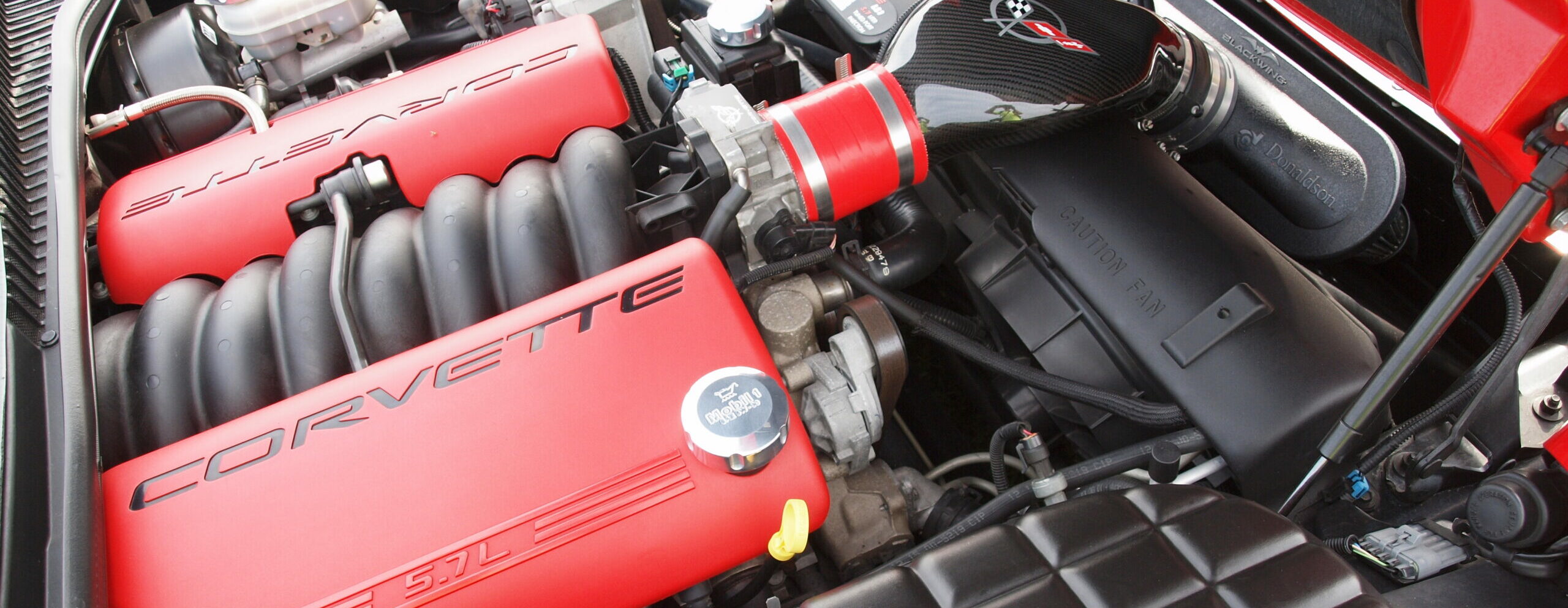
The alternator keeps your Corvette’s electrical system running once the engine is on, recharging the battery and powering everything from headlights to the infotainment system. When it starts to fail, the symptoms can be easy to mistake for a battery problem, but catching them early can save you from being stranded on the side of the road. Here’s what to watch for, generation by generation nuances included.
How an Alternator Actually Fails
Alternators rarely fail instantly. Most go through a gradual decline as internal components wear: brushes wear down, the voltage regulator drifts out of spec, diodes fail one at a time, or bearings wear enough to let the pulley wobble. That’s why symptoms tend to build gradually rather than appear all at once, and why catching the early signs below matters more than waiting for a dead stop.
1. Dimming or Flickering Headlights
Headlights are one of the vehicle’s largest continuous electrical loads, so a drop in charging system voltage often shows up first as dimming at idle or flickering under load, since the alternator charges the battery which in turn powers the headlights and other electrical systems. This tends to worsen over time if left unaddressed, and it’s often most noticeable at night when you’re actually relying on full headlight output.
2. Dashboard Battery or Charging Warning Light
Most Corvettes will illuminate a battery or “ALT” warning light on the dash when the charging system voltage falls outside the normal range. Don’t dismiss this as a fluke; it’s the system’s earliest and most reliable warning, and later generations with a digital driver display may show a more specific charging system message instead of a simple icon.
3. Electrical Accessories Acting Up
Power windows moving slowly, dashboard lights flickering, or the radio cutting in and out are common signs, since these systems all depend on a stable electrical supply from the alternator. On newer Corvettes with more electronics tied into a shared electrical architecture, a failing alternator can trigger unrelated-seeming warning lights across multiple systems at once.
4. Difficulty Starting or a Repeatedly Dead Battery
A failing alternator can’t fully recharge the battery while driving. If your Corvette struggles to start, or the battery keeps dying despite being replaced with a new one, the alternator is a likely culprit rather than the battery itself.
5. Whining or Grinding Noise
A failing alternator often develops a whining or grinding noise from worn bearings or a slipping belt, audible from the engine bay, especially as accessories draw more power. A whine that changes pitch with engine RPM specifically (rather than staying constant) often points more directly to the alternator rather than another accessory on the same belt.
6. Burning Smell
Overheating components or a slipping belt inside a failing alternator can produce a burning rubber or electrical smell in the engine bay. This symptom often shows up alongside visible smoke in more advanced cases and shouldn’t be driven through.
How to Tell an Alternator Problem from a Battery Problem
The most reliable way is a voltmeter test: with the engine running, alternator output should typically read around 13.5 to 14.5 volts. A reading well below that, especially with accessories on, points to the alternator rather than the battery. If the voltage reads normal at idle but drops noticeably when you turn on the headlights, AC, and radio simultaneously, that’s a sign the alternator can’t keep up with peak electrical demand even if it passes a basic no-load test.
Does This Vary by Corvette Generation?
Earlier generations (C4 and before) use simpler charging systems that are generally easier to diagnose with a basic voltmeter test. Later generations (C6 and newer) integrate the alternator more closely with the car’s broader electrical and computer systems, so a failing alternator can sometimes throw codes or warnings that look unrelated to charging at first glance, making a proper scan tool diagnosis more valuable than symptom-watching alone.
What to Do If You Suspect a Bad Alternator Right Now
If you notice dimming lights or a warning light while driving, minimize additional electrical load immediately: turn off the radio, non-essential accessories, and if it’s daytime and safe to do so, unnecessary lighting. This buys extra time on a failing alternator by reducing the drain on the battery, since the battery is now doing most or all of the work the alternator normally would. Head toward home, a shop, or a parts store rather than continuing a long drive, since the failure point becomes less predictable the longer a failing charging system runs under load.
Why Corvettes Are Particularly Sensitive to Alternator Issues
Corvettes, especially later generations, run a considerable amount of onboard electronics: traction control, active suspension modules, infotainment, and in some cases performance data logging. A marginal alternator that a simpler car might tolerate for a while can cause more noticeable symptoms on a Corvette specifically because there’s more electrical demand competing for the same limited output. This is part of why addressing early alternator symptoms promptly matters more on a heavily optioned Corvette than it might on a more basic vehicle.
Frequently Asked Questions
Q: How long can I drive with a bad alternator?
A: It depends on your battery’s condition and electrical load, but many drivers can go a short distance, sometimes 30 minutes or less, before the car stalls. Treat any warning signs as urgent rather than something to put off, since the failure point is unpredictable once symptoms appear.
Q: Can a bad alternator damage other parts of my Corvette?
A: Yes. Voltage that’s too low or too high can affect sensitive electronics over time, and a completely drained battery can shorten the battery’s lifespan even after the alternator is fixed.
Q: What does it cost to replace a Corvette alternator?
A: Costs vary by generation and whether you choose OEM, remanufactured, or a high-output upgrade, but budgeting for both the part and installation labor is wise if you’re not doing it yourself, since access varies significantly by generation and engine bay layout.
Q: Can I test my alternator without a voltmeter?
A: A rough field test is to disconnect the battery briefly with the engine running (not recommended on modern electronically-controlled Corvettes) or to watch for headlight brightness changes when revving the engine. A proper voltmeter test is far more reliable and doesn’t risk damaging sensitive electronics.
—







Leave a Response